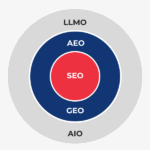
SEO is evolving fast. And we’re no longer just writing for search engines. We’re now entering the AI age of discovery, where machines like ChatGPT, Perplexity, and Google’s AI Overviews are not just pulling links, they’re giving answers. Welcome to the era of Generative Engine Optimization (GEO).
If you’ve spent years mastering meta tags, backlinks, and keyword clusters, take a breath. You’re not starting from scratch. Most of your skills are still very relevant, they just need a generative twist.
Let’s break it down together.
What is Generative Engine Optimization?
Generative Engine Optimization (GEO) is the practice of optimizing your content for AI-powered tools that generate direct answers to users’ queries, think ChatGPT, Claude, Perplexity, and Google’s Search Generative Experience (SGE). Instead of ranking links on a search results page, these tools pull information from various sources and present it as synthesized, conversational responses.
That means your content might be used in AI outputs, even if users never click on your link. And that’s exactly why visibility in this space matters.
Semrush research suggests that by the end of 2027, traffic from LLMs could overtake traditional Google search.

GEO vs. SEO: What’s the Difference?
At a high level, Generative Engine Optimization and Search Engine Optimization have similar goals to get your content in front of users, but the way they do it is different.
What They Have in Common
- Quality content still wins: Whether it’s an LLM or Googlebot, helpful, well-structured, and credible content rises to the top.
- Search intent matters: SEO taught us to match user intent. GEO is no different. Generative engines still interpret queries and look for contextually relevant answers.
- E-E-A-T is still king: (E-E-A-T) Experience, Expertise, Authoritativeness, and Trustworthiness signal credibility for both SEO and GEO.
Where They Differ
- Search results vs. summaries. SEO gets you a blue link. GEO gets you a quote in an AI-generated paragraph. The format of your content matters more now.
- Ranking vs. referencing. You’re not trying to rank #1 on a results page, you’re trying to get referenced as the best answer inside an AI response.
- Structure > backlinks. SEO leaned heavily on backlinks. GEO? It leans on how digestible your content is. Bullets, headers, and summaries are key.
Why GEO Matters More Than Ever
People are asking AI tools for answers and skipping Google altogether. And the way these tools fetch and synthesize info changes the game for marketers.
Think of it like this: When someone types “best tools for email marketing” into Perplexity, they’re not going to get 10 blue links. They’ll see a list of top tools, a few sentences about each, and maybe a clickable citation.
Now ask yourself is your content being pulled into those answers?
If not, it’s time to rethink your strategy.
ChatGPT became the fastest app in history to hit 100 million users and, as of February 2025, serves over 400 million weekly users.
Semrush, together with Datos, analyzed more than 200,000 keywords with a search volume above 100 to see how AI Overviews affect search.
The study compared keywords that showed an AI Overview and those that didn’t between January and March 2025. They also tracked keywords that gained an AI Overview by March, making it possible to measure how user behavior changed once the feature appeared.

Keywords that bring up AI Overviews usually see more zero-click searches, but that may be because people are mainly looking for information, not due to the Overview itself.
How Generative Search Engines Work
Generative search engines don’t just serve up a list of links the way traditional search engines do. Instead, they use large language models (LLMs) to understand, collect, and repackage information into direct answers. Here’s a breakdown of how they work when someone types in a query:
1. Interpret the Query
Artificial Intelligence analyzes the full intent behind the question. That means looking at the phrasing, the tone, and the context. For example, if someone searches “best laptops for college,” the engine understands this isn’t about all laptops, it’s about affordable, lightweight devices suitable for students.
2. Scan the Web
Instead of relying only on Google’s top 10 results, generative engines look across a broader set of data: articles, reviews, Q&A forums, product listings, and even niche blogs. This allows them to pull from multiple perspectives rather than a narrow slice of search results.
3. Summarize the Findings
Using an LLM, the engine condenses that research into a digestible, conversational response. The output feels more like advice from a knowledgeable friend than a block of text. For instance, it may give you a short list of laptop options with pros and cons, instead of forcing you to click through multiple sites.
4. Attribute the Sources
Some engines, like Perplexity, cite their references so users can verify where the information came from. Others, like ChatGPT, may generate the answer without showing links, leaving it up to the user to trust the response.
The Goal
The ultimate purpose is speed and trust. Instead of sending users through several links, generative engines aim to provide a direct, useful answer in one place, often reducing the need to click away from the platform at all.
How GEO and SEO Work Together
GEO and SEO work best when they’re used together instead of in silos. SEO makes sure your content shows up in Google, while GEO makes sure it gets picked up by AI tools like ChatGPT, Gemini, or Perplexity.
Here’s how they connect in practice:
1. Keyword Research Feeds Both
- SEO: Helps you rank in Google for high-intent searches.
- GEO: Helps you frame answers around the same queries so AI engines can surface your content in responses.
2. Content Structure Matters
- SEO: Clear headings, schema markup, and optimized metadata improve rankings.
- GEO: Those same elements make it easier for generative engines to parse and cite your content in summaries.
3. Answer-First Writing
- SEO: Improves chances of capturing featured snippets.
- GEO: Increases the likelihood of being quoted directly by AI engines when users ask questions.
4. Authority + Trust Signals
- SEO: Backlinks and E-E-A-T guidelines build Google credibility.
- GEO: The same signals help generative engines decide whether your content is reliable enough to reference.
For example: Say you write a guide on “best CRM tools for startups.”
- With SEO, your page might rank on Google for “CRM tools for small business.”
- With GEO, your listicle if structured with clear pros/cons, comparison tables, and FAQs could also be cited by ChatGPT or Perplexity when someone asks, “What’s the best CRM for startups under $50/month?”
8 Steps to Make GEO and SEO Work Together
Here’s where things get tactical. Based on what’s working in the field right now, here are some clear strategies to GEO your content:
1. Focus on Clear Structure
Generative engines prefer content that is easy to read, easy to scan, and logically organized. If your page looks like a wall of text, AI models are less likely to extract key insights from it. A clear structure increases your chances of being cited directly in an AI-generated response and also improves readability for human visitors.
Use Headings as Signposts
Break your content into sections with H2 and H3 headings. Treat each heading like a mini question that the section answers. For example:
- Instead of “Benefits”, write “What Are the Benefits of Email Automation?”
- Instead of “Process”, write “How Does Email Automation Work?”
This approach mirrors user queries, making your content more useful for both search engines and generative engines.
Lean on Lists for Clarity
Bulleted or numbered lists make it easy for AI models to identify key points. Use lists to highlight steps, features, or pros and cons. Each bullet should be concise and self-contained, think of it as a line that could stand on its own in a summary.
Example
Instead of writing:
“Email automation saves time, helps nurture leads, and ensures consistent communication.”
Write it as
- Saves time by reducing repetitive manual tasks
- Nurtures leads with personalized sequences
- Ensures consistent communication at scale
Keep Paragraphs Short and Punchy
Long blocks of text are hard for both people and AI engines to process. Aim for two to three sentences per paragraph. Start with the main point, then follow with supporting detail or an example.
Example:
“Generative engines often prefer structured answers over narrative explanations. A clear structure helps them extract and reuse your content directly in summaries.”
2. Be Ridiculously Helpful
Generative engines don’t reward surface-level content. They’re trained to identify depth, clarity, and usefulness, so the more value you provide, the more likely your content is to be pulled into AI-generated answers. Think of it this way: if a user relies on an AI to explain something, your content may become the foundation of that answer.
Answer Real Questions
Don’t dance around the topic instead address the exact questions your audience is asking. If your blog is about “best project management tools,” don’t just list the tools; explain which tool works best for different types of teams or what pitfalls to avoid. The closer your content matches the user’s intent, the more AI systems will find it relevant.
Use Proof, Not Fluff
Generative engines favor content that is backed by substance. Add examples, case studies, data points, or analogies that make your points more concrete. For instance, instead of saying “short-form video boosts engagement,” you could write: “According to HubSpot, short-form video has an average engagement rate of 53%, making it the most effective format for social platforms.”
Link to Credible Sources
Don’t shy away from linking to authoritative sources, even if they’re competitors. Outbound links build trust, show you’re not afraid of transparency, and give AI engines contextual signals about your content’s credibility.
Why It Matters
Helpful, detail-rich content signals to both Google and generative engines that your page is authoritative and trustworthy. When your content becomes the best possible answer to a question, you don’t just rank higher, you increase your chances of being directly quoted or referenced by AI systems.
3. Target Conversational Queries
When people use generative search engines, they don’t type like they do in Google. Instead of short, robotic keywords such as “best CRM”, they ask questions the way they would ask a friend:
- “What’s the easiest CRM for a small team?”
- “Which CRM is best for agencies on a budget?”
This shift changes how we approach keyword research. Instead of focusing only on short phrases with high search volume, we now need to include natural, question-style queries that reflect how people really talk.
Why Conversational Queries Work
AI engines are designed to mimic human conversation. If your content matches the way users phrase their questions, it becomes easier for the AI to recognize your answer as a good fit and use it in responses.
How to Find Conversational Keywords
You don’t have to guess how people ask these questions, there are tools that can help:
- Google’s “People Also Ask” → See the exact questions users type into search.
- AlsoAsked → Helps you visualize related follow-up questions people are asking.
- ChatGPT itself → Simply ask: “How would someone ask about finding a CRM tool?” and you’ll get natural, human-style queries you can use.
Pro Tip
Create content that mirrors these questions in your headings and answers them directly in short, clear sentences. This way, both Google and generative engines can easily match your content to what the user is asking.
Example
Instead of writing:
“CRM tools are designed to help businesses manage customer relationships effectively.”
Write
“The easiest CRM for small teams is one with a simple setup, affordable pricing, and basic features like contact management and task tracking.”
The Takeaway
By targeting conversational queries, you’re meeting users where they are whether they’re searching on Google or chatting with AI. The result is higher chances of being cited, clicked, and trusted.
4. Prove You’re a Trusted Source (E-E-A-T)
Generative engines are designed to prioritize reliability. Unlike traditional search, where multiple results are displayed and the user chooses, AI systems often surface a single synthesized answer. That means they need to be confident in the sources they pull from. This is where (E-E-A-T) Experience, Expertise, Authority, and Trust, becomes your edge.
(E) Experience: Show You’ve Been There
AI tools prefer sources that speak from real-world application, not just theory.
- Share case studies that showcase what worked and what didn’t.
- Write about personal use or firsthand experiences with a product, tool, or strategy.
- Include screenshots, data, or before-and-after examples to prove your insights aren’t generic.
Why it matters: Generative systems are getting better at detecting authenticity signals. Content rooted in real experience is harder to dismiss as fluff.
(E) Expertise: Go Beyond the Surface
Anyone can repeat what’s already ranking, but AI is built to identify content that demonstrates real subject knowledge.
- Write in-depth guides that break complex topics into clear explanations.
- Use industry terminology correctly but explain it in accessible language.
- Stay in your lane and cover topics where you or your brand have genuine authority, instead of chasing trends everywhere.
When engines detect detailed, accurate, and nuanced content, they’re more likely to trust your page over thin, keyword-stuffed alternatives.
(A) Authority: Be Recognized by Others
It’s not enough to say you’re credible; others need to validate it. Authority is built externally.
- Earn mentions or backlinks from respected websites, blogs, or industry publications.
- Contribute to guest posts, podcasts, or expert roundups where your name or brand gets cited.
- Participate in industry associations, research collaborations, or webinars to get your voice associated with credibility.
Generative engines consider not only what’s on your site, but also how the web at large views you. The more your name pops up in reputable contexts, the stronger your authority signal.
(T) Trust: Make It Easy to Believe You
Even if you’re experienced, expert, and authoritative, users (and AI systems) need reassurance that your content is accurate and safe.
- Add real author bios with credentials, not just generic “team” labels.
- Cite credible sources (academic papers, government sites, respected publishers).
- Showcase user reviews, testimonials, and third-party ratings to strengthen confidence.
- Ensure your site looks and feels professional, outdated design or poor UX can signal unreliability.
Trust isn’t only about facts, it’s about perception. AI systems mirror user behavior, and if users don’t trust your site, engines will hesitate too.
The Payoff: Why E-E-A-T Powers GEO
When you align your content with E-E-A-T, you’re not just boosting your SEO ranking, you’re also making yourself the kind of source AI models want to reference directly. Clear signals of credibility help your brand show up in conversational answers, summaries, and AI-driven overviews.
5. Optimize for Multi-Format Content
Generative engines don’t just read your text, they scan, interpret, and sometimes even prioritize content that comes in multiple formats. While a long-form blog might cover the depth, visuals and structured data often make the insights easier for both humans and AI to process. The more ways you package your knowledge, the more “entry points” you give engines to pull from and surface in AI-driven results.
Go Beyond Plain Text
A wall of paragraphs, no matter how well written, is harder for AI to parse into clean snippets. Adding visual layers makes it easier for engines to spot and reuse your ideas.
- Charts & Graphs: Show trends, comparisons, or statistics visually. For example, if you’re writing about “growth in short-form video,” a bar chart with engagement rates by format is more digestible than numbers in a paragraph.
- Infographics: Summarize key steps, strategies, or frameworks in a single image. Generative engines often favor this kind of compressed knowledge for quick references.
- Step-by-Step Visuals: Screenshots, flowcharts, or annotated images can illustrate processes better than text alone, especially for tutorials.
Think of visuals as “knowledge anchors”, they help both readers and AI models capture the essence of your content faster.
Use Schema Markup to Add Structure
AI engines thrive on structured data. Schema markup turns your content into machine-readable language that highlights exactly what type of information is on the page.
- FAQ Schema: Mark up Q&A sections so engines can easily detect question-answer pairs.
- How-To Schema: Perfect for tutorials, checklists, or guides that walk users through a process.
- Product & Review Schema: Adds rich metadata like pricing, availability, and ratings, making it more likely your content gets cited in product-related queries.
Pro Tip
Schema markup doesn’t just help generative engines, it also boosts your visibility in traditional search through rich snippets.
Repurpose Content Into Other Formats
Don’t stop at one version of your content. Repurposing increases your chances of being referenced in AI summaries and social feeds.
- Short Videos: Convert blog sections into 60–90 second explainers that answer a question directly. These are easy for AI-driven systems and social platforms to surface.
- Carousels or Slides: Break down complex processes into bite-sized slides. Generative engines scanning for summaries often prioritize this kind of modular format.
- Audio Snippets: Turn a written article into a podcast-style breakdown. Voice-friendly formats align well with conversational AI assistants.
The goal is to meet users in the format they prefer, while giving engines multiple assets to work with.
Why It Matters
Multi-format content increases your surface area for visibility. Each additional format like text, visual, video, structured data is another opportunity for Google, ChatGPT, Perplexity, or other generative systems to recognize and cite your content. It also makes your content more engaging for humans, which keeps users on the page longer, a signal AI engines don’t ignore.
6. Refresh Content Frequently
AI models give preference to content that is current and accurate. Outdated posts lose credibility quickly, especially in fast-moving fields. A blog written in 2021 that hasn’t been updated is less likely to be cited than one that reflects the latest data and insights.
Review and Update Old Content
Go through older posts regularly and update them to keep information reliable.
- Replace outdated statistics with the most recent data.
- Update screenshots, tools, or product references to match current versions.
- Fix broken or outdated links that reduce user trust and credibility.
Add “Last Updated” Timestamps
Marking posts with the date of the latest update shows both readers and search engines that the content is actively maintained. Place this near the top of the article for visibility. Adding a short note on what was updated can also reassure readers that the changes are meaningful.
Expand with New Information
Each refresh is an opportunity to add value.
- Include new FAQs that reflect how people are asking questions today.
- Add recent industry updates, algorithm changes, or product features.
- Refine headings to match conversational queries that are trending now.
Treat Content as Living Documents
High-performing pages should be managed over time instead of being left alone after publication. Revisiting them ensures they continue to bring in traffic, backlinks, and visibility in generative search.
Why It Matters
Fresh content improves trust, keeps your rankings steady, and increases the chances of being cited in AI-generated answers. Regular updates make your content a reliable resource that both people and AI systems can depend on.
7. Make Content Too Good to Bounce From
Generative engines are designed to learn from how people interact with content. If visitors click through, spend time reading, interact with your resources, and share your page, those signals tell both Google and AI systems that your content is worth keeping in circulation. If users land on your page and leave right away, engines take it as a sign that your content isn’t delivering.
Hook Readers From the Start
The opening lines decide whether someone keeps scrolling or exits immediately. A strong introduction makes the user feel that the content will answer their question directly.
- Use a short, bold statement that addresses the core pain point.
- Add a quick story, example, or statistic that sets the stage.
- Keep intros clear and free from filler to respect the reader’s time.
Keep Readers Involved with CTAs
Engagement increases when people are given something to do. Calls-to-action don’t always need to be salesy; they can be interactive prompts that provide extra value.
- Offer downloads like templates, checklists, or guides.
- Insert “Try this” or “See how it works” prompts that invite readers to engage with a tool or example.
- Add internal links to related posts so readers continue exploring your site.
Encourage Community Signals
Search and generative systems also watch for signs of validation from real users.
- Enable comments where readers can ask questions or share experiences.
- Highlight customer reviews, testimonials, or social proof.
- Encourage user-generated content like case studies or contributions that add depth to your page.
These interactions show that people trust your content enough to engage with it publicly.
Why It Matters
Engagement is more than a vanity metric, it’s proof that your content provides value. High time-on-page, repeat visits, and user contributions all strengthen the signals that search and AI models use to decide what to feature. Content that holds attention is more likely to be cited in AI-driven results and ranked higher in traditional search.
8. Integrate Internal & External Linking Smartly
Links are the pathways that help both search engines and generative models understand how your content fits into the bigger picture. Internal links create a map of your expertise across different topics, while external links connect your work to the broader ecosystem of credible information. Together, they form the context web that Generative Engine Optimization relies on to surface trustworthy answers.
Strengthen Topical Clusters with Internal Links
Internal linking defines the structure of your expertise. It tells search engines which pages are central, how topics relate, and where authority should flow within your site.
- Link related articles together to form clusters around a single theme. For example, if you have multiple posts on “content automation,” connect them to a central pillar page.
- Use descriptive anchor text that reflects the query someone might type, not generic phrases like “click here.”
- Prioritize linking to high-value pages (your guides, tools, or resources) to direct authority where it matters most.
This structure shows AI systems that your site covers a topic in depth, not just in isolation.
Build Credibility with External Links
Outbound links act as trust markers. By citing authoritative sources, you demonstrate that your content is backed by evidence.
- Reference data from research firms, academic studies, or respected industry publishers.
- Don’t be afraid to cite competitors if they are the source of credible information, transparency strengthens trust.
- Mix in both primary data (official reports) and secondary sources (case studies, expert insights).
Engines treat external links as a sign that you’re contributing to the conversation, not just echoing your own claims.
Balance Depth and Authority
The most effective strategy is a mix:
- Internal links signal breadth and depth of your coverage.
- External links reinforce authority and reliability.
Together, they create the contextual signals AI engines use to decide whether your content deserves to be included in summaries and conversational answers.
Tools to Monitor Your GEO Presence
It’s early days for measuring generative engine optimization success, but a few tools are emerging:
- Perplexity: Run your own prompts to see if your content shows up in citations.
- AI Search Grader by HubSpot: Drop your URL and get insights on visibility.
- Google’s Search Console (SGE Insights): Still evolving, but keep an eye here.
- G4 reports + branded queries: Use Google Analytics to see if visibility in AI is driving branded search.
Pro tip: Screenshot your content in ChatGPT or Perplexity citations. Over time, you’ll see patterns in what gets featured.
Tips to Future-Proof Your GEO Strategy
- Avoid keyword stuffing. AI sees through it and won’t reference poorly written content.
- Write for humans. Then format for AI. Tools like Hemingway can help.
- Use schema markup. FAQs, reviews, recipes, product info, all help bots understand your page.
- Update regularly. AI loves fresh, accurate content.
- Build content clusters. Group related articles under pillar pages to boost contextual relevance.
Will GEO Replace SEO?
Nope. Think of it as an evolution, not a replacement.
SEO still matters, especially for transactional, navigational, and local searches. But GEO is catching up fast in informational and product discovery queries.
In fact, they complement each other beautifully. Great SEO content = a solid foundation for GEO visibility.
Final Thoughts: GEO isn’t Optional Anymore
The way people discover content is shifting and fast.
If you want your brand, product, or insight to show up in the new wave of AI-powered discovery, you need to think beyond blue links. Generative Engine Optimization is about helping machines help people. It’s about showing up in the answers, not just in the search results.
So start now. Structure better. Write clearly. Think conversationally. And keep your human edge.
Because in the age of AI, it’s the most human, helpful content that truly stands out. Ready to show up where it counts? Let DigiXL Media help you craft content that gets found and remembered. Connect with us on: X, LinkedIn and Facebook.