Search marketing has always been about chasing visibility in whatever environment people use to find answers. For decades, that environment was Google’s search box. Today, it’s an ecosystem of AI-driven experiences, voice assistants, and large language models (LLMs) that provide direct answers to questions.
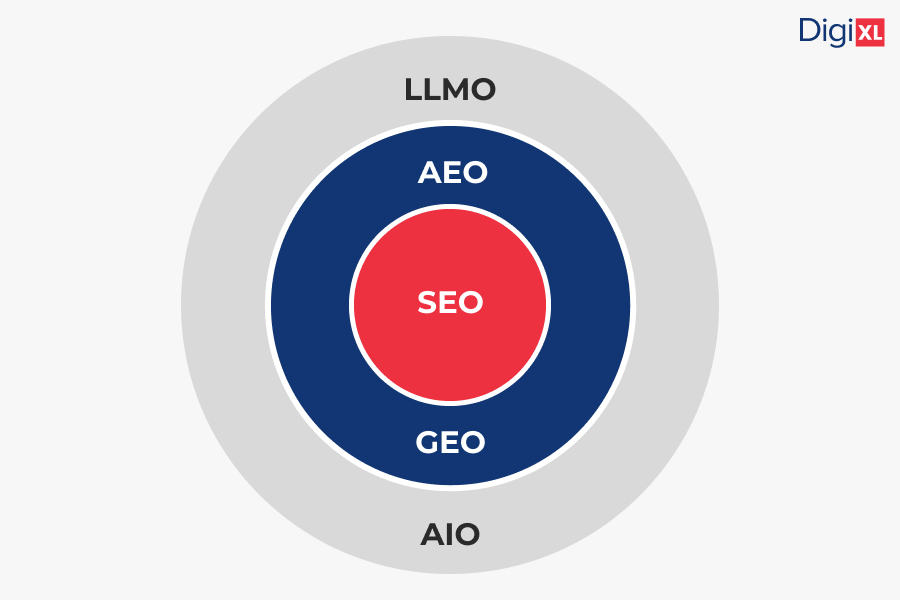
The traditional SEO toolkit consists of keywords, backlinks, site speed, and structured data is still relevant, but it’s no longer enough. New strategies have emerged: Generative Engine Optimization (GEO), Answer Engine Optimization (AEO), AI Optimization (AIO), and Large Language Model Optimization (LLMO).
Marketers are asking: Are these truly new disciplines, or are they simply the next evolutionary stages of SEO? Let’s break it down.
Understanding the acronyms GEO, AEO, AIO and LLMO
Each one of these acronyms represents a different way search engines and platforms rank, display, or summarize information. Knowing what they mean and how they affect your strategy can help you create content that actually reaches your audience and gets noticed.
1. GEO (Generative Engine Optimization)
GEO focuses on optimizing content so it can be accurately retrieved and presented by generative AI systems like ChatGPT, Gemini, Perplexity, or search features with AI Overviews.
Why GEO Matters in AI Search
Generative engines don’t just link to your page, they summarize, paraphrase, and blend your content with others. If your information isn’t recognized as authoritative or complete, you may never be referenced at all.
How it works in practice
- Structured answers: Break down topics into Q&A-friendly segments so AI models can easily pull coherent chunks.
- Entity clarity: Make sure people, brands, products, and concepts are explicitly named and linked to authoritative sources.
- Context-rich language: Instead of keyword stuffing, use full, natural explanations with supporting facts and data.
Example: If you publish a detailed guide on “enterprise SaaS onboarding,” GEO means structuring it so AI can lift a complete, high-value onboarding checklist and cite your brand when responding to user queries.
2. AEO (Answer Engine Optimization)
AEO predates the current AI wave, but it’s become even more relevant. It’s the art of making your content the go-to answer in environments like Google’s featured snippets, Bing’s AI answers, or even Alexa’s voice responses.
Why it matters
Search is becoming answer-first. Instead of “10 blue links,” users increasingly see one definitive response. Being that response means you capture trust and brand presence instantly without a click.
AEO best practices today
- Direct language: Write concise, complete answers to common questions.
- Schema markup: Use FAQ, HowTo, and Product schema so engines can parse your content better.
- Authority reinforcement: Pair direct answers with proof, stats, references, or expert quotes.
Example: A marketing analytics platform can own the query “how to track cross-channel ROI” by providing a 50–60 word, stat-backed definition paired with a visual chart.
3. AIO (Artificial Intelligence Optimization)
AIO goes beyond SEO, it’s about preparing your content for discovery, understanding, and engagement across any AI system, from chatbots to embedded copilots in productivity tools.
Why it matters
Content today isn’t just being searched, it’s being processed, summarized, and recommended by AI models that “read” differently than humans. If your content isn’t AI-readable and contextually rich, you’ll be invisible in AI-native ecosystems.
Key AIO tactics
- Data depth: AI thrives on details. Add statistics, definitions, and examples so your content can be used as a complete thought, not just filler.
- Multi-format assets: Provide text, visuals, transcripts, and metadata so AI can use your content in various modes (text-only answers, video recaps, etc.).
- Semantic density: Cover related concepts so the AI understands the topic in depth and keeps your brand in context.
Example: Instead of just a blog on “B2B lead generation,” create a resource hub with articles, explainer videos, and PDF checklists, all internally linked so AI systems see your site as a rich, connected dataset.
4. LLMO (Large Language Model Optimization)
Large Language Model Optimization (LLMO) focuses on making your content easily discoverable, understandable, and quotable by large language models (LLMs), the AI brains behind chatbots like ChatGPT, Gemini, Claude, and Mistral.
As more users rely on conversational AI for answers, LLMO asks a critical question: How do we ensure our content becomes a trusted reference inside these AI systems, even when no live search is performed?
LLMO is about ensuring your brand, products, and expertise are so clearly defined and well-documented that AI models can confidently pull from them. The aim is for your information to be part of the model’s knowledge base, surfacing naturally when relevant questions are asked.
Key LLMO Best Practices
- Strengthen entity recognition by naming your brand, products, and people consistently and linking them to authoritative sources.
- Provide context beyond keywords so AI understands concepts, not just terms.
- Create content that synthesizes information across sources, not just repeating basics.
- Maintain factual accuracy and cite credible references wherever possible.
- Build digital PR and thought leadership so your expertise is echoed by other high-authority sites.
In many ways, this isn’t new; SEOs have been optimizing for entities since Google’s Knowledge Graph arrived in 2012. The shift is in how and where those entities are consumed: not just on a search results page, but in the very thought process of AI systems.
Are These Just SEO in Disguise?
In essence, yes. GEO, AEO, AIO, and LLMO all stem from the same core philosophy as SEO, which is making your content as discoverable and relevant as possible within a specific discovery channel.
The key difference is not in the underlying principles but in who you are optimizing for and how they deliver results. Instead of traditional search engines as the only gatekeepers, we are now tailoring content for new interfaces such as AI assistants, voice search devices, and generative engines, each with its own rules of engagement.
How AI is Changing the Way We Search and Discover Information
Search is going through one of its biggest transformations since Google launched, and the driver of this change is artificial intelligence. Instead of a simple list of links, search results are now filled with AI-generated summaries, instant answers, and interactive tools. To adapt, we need to understand exactly how these changes are unfolding and what they mean for visibility.
1. AI Answers Are Moving to the Top
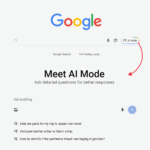
In Google’s Search Generative Experience (SGE), the first thing users see isn’t a list of links, it’s an AI-generated overview. This “AI Overview” compiles information from multiple sources, paraphrases it, and presents it as a single, easy-to-read summary.
- What it looks like: On the left, you get a conversational answer written by AI. On the right, you might see a few cited sources that contributed to that answer.
- Why it matters: Your site could contain the best content on the topic, but if it’s not included in the AI’s references, you may lose prime visibility, even if you rank well in organic search.
Example: If someone searches for “best email marketing platforms,” they may read the AI Overview’s quick recommendations and never scroll to the organic results below.
2. The Classic “10 Blue Links” Are Fading
For years, search results followed the same pattern: a page with ten organic listings. That’s no longer the case. Today’s search results include:
- AI-generated answers
- Featured snippets
- “People Also Ask” boxes
- Product carousels
- Video clips
Impact: Organic listings are being pushed further down the page. Even if you’re ranking #1, your position might now be halfway down the screen, below AI summaries and other features.
3. User Behavior is Splitting
Not everyone reacts to AI answers the same way:
- Group 1: Many users are satisfied with the AI-generated summary and never click through to a website.
- Group 2: A smaller segment doesn’t fully trust AI and scrolls past it to find traditional search results.
Why it matters: Trust still plays a huge role in search. People are becoming more aware that AI can make mistakes, so they still value authoritative, original sources, especially in complex or sensitive topics.
4. Search is Happening Beyond Google
The search journey no longer starts and ends with Google. Today, people are:
- Asking Siri or Alexa for quick answers.
- Using ChatGPT, Claude, or Perplexity to research topics.
- Searching directly inside apps like YouTube, TikTok, and LinkedIn.
Example: A user planning a trip might ask ChatGPT for an itinerary, check TikTok for destination ideas, and then use Google Maps to find restaurants, never doing a traditional Google search for “things to do in Bali.”
5. Rethinking What “Winning” Means
In the old SEO world, success was measured by rankings and clicks. In the AI era, visibility itself is becoming a key metric.
- Being mentioned in an AI-generated answer, even without a click, builds brand awareness and authority.
- Voice assistants and chatbots might give recommendations without showing any links at all, meaning your only chance to “win” is to be named in their answer.
Example: If ChatGPT tells a user, “Brand X is one of the top-rated tools for small business accounting,” that’s valuable exposure, even if the user never visits your site.
The Bottom Line
We’re in an “answers everywhere” era where AI, voice assistants, and chatbots compete to provide information instantly. The challenge for marketers is no longer just ranking, it’s ensuring that our content is included in the answers that people receive, no matter where or how they ask their questions.
The next step? Adjusting our optimization strategies so AI-powered systems can easily find, understand, and cite our content. That’s where GEO, AEO, AIO, and LLMO come into play.
Adapting Your SEO Strategy for AI-Driven Search Results
If search is changing, our optimization strategies need to evolve with it. The fundamentals of SEO still matter, but AI-powered results bring a few new rules to the game. Here’s how you can adapt your approach so your content isn’t just indexed, it’s surfaced, cited, and remembered by AI systems.
1. Make your content sound like a real conversation
AI tools love content that feels natural and directly answers real questions people ask. Instead of stiff, keyword-stuffed paragraphs, aim for a Q&A or FAQ style. Mirror the way people actually phrase questions – “What’s the best way to improve my website’s ranking with AI?” works better than a flat “AI SEO tips.”
2. Go deeper into long-tail, natural language search terms
People are speaking to AI in complete sentences, not clipped keyword phrases. That means you should integrate more detailed, conversational search terms into your pages. Think of these as “searchable sentences”, specific enough to match AI queries, but still relevant to your audience.
3. Help machines read your content clearly
Structured data and clean HTML make it easier for AI and search engines to understand what’s on your page. Adding schema markup (FAQ, HowTo, Article, Product, etc.) is like leaving labeled folders for the bots, they can grab exactly what they need faster, improving your chances of appearing in AI-generated answers.
4. Become the definitive source on your topic
AI answers often blend information from multiple sites, but the ones that get cited tend to be the most complete. Instead of giving short summaries, aim for in-depth coverage with data, examples, and context. The more comprehensive your page, the higher the chance AI will see it as “worth quoting.”
5. Keep your on-page SEO sharp
Titles, meta descriptions, and internal linking still play a big role. A clear, keyword-rich title tells both AI and humans exactly what they’ll find. Internal links guide readers (and crawlers) deeper into your site, helping spread authority across pages.
6. Strengthen your authority outside your site
Backlinks and brand mentions are still gold. AI uses trust signals to decide what content to highlight. Being linked from respected industry sites, featured in news articles, or referenced in expert forums builds the kind of authority AI systems are trained to notice.
7. Ensure your site is technically seamless
Fast load times, mobile-friendly layouts, and easy navigation aren’t just good for users, they’re signals AI and search crawlers rely on. A clunky, outdated site risks being overlooked even if your content is solid.
8. Make your brand stick in AI’s “memory”
Unlike search rankings, AI retrieval focuses on whether it’s seen and stored your brand’s content before. Consistent branding, tone, and messaging across your site, socials, and publications help AI systems recognize and recall your presence.
9. Actively check how AI is showing your brand
Instead of guessing whether your optimization is working, test it. Query tools like ChatGPT, Perplexity, or Bing Chat for your target terms and see if your content appears. Some platforms even track this for you, showing when, where, and how AI references your brand versus competitors.
10. Keep your content living and breathing
Freshness matters. AI tools tied to live web data prioritize recent information. Updating your articles with the latest stats, industry changes, and examples sends a strong “this is current” signal and can boost both search and AI visibility.
Keep Your Search Game Strong
Search is changing, and so should your strategy. Head to DigiXL Media for practical tips you can actually use, and follow us on social for fresh updates that help you stay visible where it matters most. X, LinkedIn and Facebook.