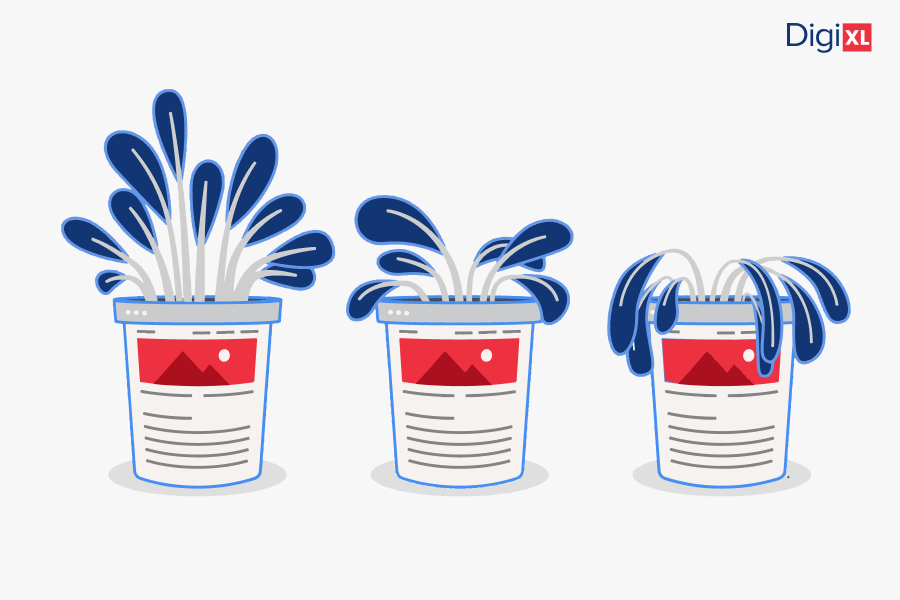
Have you ever had a blog post that once pulled in steady traffic, leads, and rankings… only to watch it slowly fade into obscurity?
Maybe it sat on the first page of Google for months, and then out of nowhere, it dropped to page two, three, or worse. Traffic slowed down, conversions dipped, and suddenly, your once top-performing piece of content feels like dead weight.
If this sounds familiar, you’re dealing with content decay. And no, you’re not the only one. It’s one of the most common challenges in SEO and content marketing.
The good news? Content decay is not permanent. With the right strategies, you can bring fading content back to life without reinventing the wheel. Let’s break down what it is, why it happens, and how to fix it.
What is Content Decay?
Content decay is when a blog post, article, or webpage that used to perform really well starts losing its effectiveness over time. In other words, it’s when your once-popular content begins to fade in visibility, traffic, and impact.
You’ll notice content decay when you see:
- Lower organic traffic – Fewer people are finding your page through Google search.
- Drop in keyword rankings – The keywords that once placed your content on page one start slipping to page two or beyond.
- Fewer clicks and engagement – People don’t click on your page as often, and those who do may not spend as much time reading or interacting with it.
- Declining conversions – The content no longer brings in as many leads, sales, or sign-ups as it used to.
The important thing to understand is that content decay is not just a one-off dip in performance. Every website has good months and slow months (for example, fewer searches in December for “business tools” because people are on holiday). That’s normal. Content decay, however, is different. It’s a steady downward trend that doesn’t recover on its own.
So, think of it like this: when you first published your blog, it was timely, relevant, and matched what people were looking for. Over time, though, the landscape changed. Your content stayed the same, while user needs, competitors, and search engines moved forward.
That’s content decay in action and it’s not sudden, but a slow slide where once-successful content loses its spark if it isn’t maintained.
Why Does Content Decay Happen?
When your content starts slipping in traffic and rankings, it’s not random, it usually happens for a few predictable reasons. Understanding them makes it easier to spot decay and take action before a page completely loses visibility.
1. Shifts in User Interest
The internet moves quickly, and so do people’s search habits. A topic that was once popular can easily fade away. For example, “how to burn CDs” used to be a hot query, but today, almost no one looks for it because streaming and cloud storage have replaced CDs.
The same thing happens with your content. Even if a blog post was once valuable, user interest can shift in ways that reduce its visibility and traffic. Sometimes people lose interest in a topic altogether, while other times they simply find answers faster in different formats.
2. New Competitors
Even if your content is strong, you’re never alone in your niche. Competitors may publish fresher, more detailed, or more engaging content that aligns better with what users want today.
Since Google’s goal is to serve the most relevant, helpful results, it will often reward that updated competitor content with higher rankings. Think of it like a new edition of a textbook, people will almost always choose the newer version over the outdated one.
3. Outdated Information
Nothing hurts credibility faster than stale information. Old statistics, outdated screenshots, broken links, or irrelevant strategies signal to readers that your content may no longer be trustworthy.
For instance, a “Social Media Trends 2019” blog might have been valuable then, but in 2025 it looks obsolete. Both users and Google can recognize when content is behind the times, which causes it to slip.
4. Algorithm Changes
Google makes thousands of algorithm updates each year, some tiny, some massive. These updates reshape how content is ranked, often placing more emphasis on things like page speed, user experience, mobile optimization, or semantic search.
If your content hasn’t been updated to reflect these new priorities, it risks sliding down the results page, even if the information is still solid.
5. Search Engine Result Changes
Even when your content is still accurate, the way search results are displayed has changed dramatically. Rich features like featured snippets, People Also Ask boxes, video carousels, AI Overviews, and zero-click searches can reduce the clicks going to traditional blog posts.
A big disruptor in the search space is AI Mode, where users can get summarized answers directly from Google’s AI without ever clicking through. This improves convenience for searchers but means that even well-ranking blog posts can see sharp drops in traffic.
In other words, it’s not always that your content suddenly became “bad.” Instead, the way people consume information has evolved, and if your content doesn’t adapt to these changes, it will inevitably decay over time.
6. Weakening E-E-A-T Signals
Finally, a major factor in content decay is how your content holds up against Google’s E-E-A-T framework: Experience, Expertise, Authoritativeness, and Trustworthiness.
When you first published, your content might have met these criteria well enough. But over time, if competitors add firsthand case studies, expert quotes, or stronger author bios while your content stays static, Google may begin to see their version as more authoritative.
For example:
- Experience: Does the content show real-world use, personal insights, or case studies?
- Expertise: Is it written by someone with proven knowledge in the field?
- Authoritativeness: Do other reputable sites reference or link to it?
- Trustworthiness: Is the content accurate, updated, and supported by credible sources?
If your page doesn’t keep strengthening these signals, it can slowly lose trust in Google’s eyes and decay follows.
Content decay happens because the world moves forward, but your content doesn’t. User interests change, competitors up their game, search algorithms evolve, SERPs get more crowded, and E-E-A-T standards rise. If your content stays frozen while everything else progresses, its performance inevitably declines.
How to Spot Content Decay Early
The tricky part about content decay is how quietly it creeps in. One month, everything looks fine—you’re ranking well and pulling in steady traffic. Then, without much warning, your blog post slips from page one to page two, traffic drops, and conversions dry up.
That’s why catching content decay early is so important. If you monitor your content regularly, you can spot the warning signs before performance completely flatlines. Here are some of the most effective ways to do it:
1. Google Search Console
Google Search Console (GSC) is a free and powerful tool for spotting early signs of decay.
Here’s what to check:
- Performance Report → Look at the clicks, impressions, and average position for each page. If you notice a consistent downward trend over the last 3–6 months, that’s an early signal of decay.
- Average Position → If a blog post used to rank in the top 5 for a keyword but now sits at position 12 or 15, it means Google is favoring newer or stronger content.
- Queries Tab → See which search queries are driving less traffic than before. If your content is slipping for its primary keywords, it’s time for an update.
Think of GSC as your first checkpoint, it shows you the “health” of your content straight from Google’s own data.
2. SEMRush or Ahrefs
If you want a more advanced view, tools like SEMRush or Ahrefs are excellent.
- Position Tracking → Both platforms allow you to track your keyword rankings daily or weekly. You can see which terms are slipping, which are holding steady, and whether competitors are overtaking you.
- Historical Data → Unlike GSC, these tools let you see how your rankings have changed over a long period. You can compare last year’s positions with today’s and spot long-term declines.
- Competitor Analysis → You can check which competitors are now ranking for the keywords you lost. This helps you understand why your content is slipping and what updates might be needed.
These tools give you the full picture and not just whether your rankings are falling, but who is taking your spot.
3. Ubersuggest
If you’re looking for a simpler, budget-friendly option, Ubersuggest is a great alternative.
- Keyword Tracking → You can monitor how your chosen keywords perform over time. If you see a steady drop in rankings, that’s a red flag.
- Traffic Analyzer → Shows which pages are losing organic visits. If your top-performing pages show consistent decline, it’s likely content decay.
- Alerts → You can set up email notifications to get warned when rankings fall significantly, so you don’t miss sudden drops.
Ubersuggest may not have all the bells and whistles of SEMRush or Ahrefs, but it’s easy to use and great for quick checks.
4. Make Monitoring a Habit
The key isn’t just checking once, it’s checking regularly. A monthly review of your top-performing content is usually enough to catch early signs of decay.
Ask yourself:
- Is traffic holding steady, or slowly dipping month after month?
- Are my target keywords losing their rankings?
- Has engagement (like time on page or bounce rate) dropped?
If the answer to any of these is “yes,” you’ve likely spotted content decay in progress. The sooner you catch it, the easier it is to fix.
How to Revive and Future-Proof Decaying Content
Here’s the part you’ve been waiting for: the actual fixes. The best solution depends on why your content is slipping, but in most cases, these strategies will not only revive traffic but also strengthen your page for the long run.
1. Update Outdated Information
Old data is one of the fastest ways to lose rankings and credibility. If your post cites a “2020 statistic” in 2025, readers and Google both notice.
- Replace outdated stats with fresh, credible sources.
- Swap old tools, platforms, or strategies with current ones.
- Update screenshots, product references, and timelines so the piece feels current.
Think of this as giving your content a “fresh coat of paint.”
2. Expand Coverage Where Needed
If competitors are outranking you with longer, more detailed guides, your content might simply be too thin.
- Audit competing articles to see what topics, FAQs, or examples they’ve included that you haven’t.
- Expand your article to cover those gaps. A 1,200-word post might need to become a 2,500-word comprehensive resource.
- Add expert insights, case studies, or first-hand experience to make your content stand out.
Depth signals expertise, which ties directly into E-E-A-T signals.
3. Remove Outdated or Weak Sections
Sometimes a piece of content isn’t underperforming because it’s old—it’s underperforming because parts of it are no longer useful. Sections that are outdated, irrelevant, or overly repetitive can confuse readers, reduce engagement, and even hurt SEO.
To fix this:
- Spot content that doesn’t add value. Look for paragraphs, lists, or examples that no longer reflect current trends, tools, or best practices.
- Cut outdated references. Tutorials for obsolete software or statistics from several years ago can make a page feel stale.
- Refocus the article. Make sure every section clearly serves the reader, answers a question, or adds meaningful insight.
By removing unnecessary or weak sections, the content becomes leaner and sharper. Readers can navigate it more easily, understand the key points faster, and search engines recognize it as a more relevant, authoritative resource.
4. Add a Table of Contents
Another simple but powerful improvement is adding a table of contents.
- Makes long-form content scannable and easy to navigate.
- Reduces bounce rates by letting readers jump to the sections they care about most.
- Creates anchor links that can appear in search results, improving click-through rates.
Especially helpful for guides over 2,000 words, where readers may otherwise feel overwhelmed.
5. Improve On-Page SEO with GEO in Mind
Even the best content can lose its edge if it isn’t updated to align with modern SEO standards and today, that includes thinking beyond traditional search to include Generative Engine Optimization (GEO). GEO focuses on how content is understood and surfaced by AI-powered search engines, voice assistants, and generative engines.
To optimize effectively:
- Revamp title tags with fresh, relevant keywords and a hook that encourages clicks. Make sure it clearly signals what the page delivers, both for humans and AI systems.
- Rewrite headers (H2s, H3s) to naturally include terms that reflect user intent and semantic relevance. AI-driven engines use these cues to understand the structure and focus of a page.
- Update meta descriptions so they are compelling, accurate, and show that the content is current. GEO systems often use meta information to summarize content in answers and previews.
- Add smart internal links to strengthen topical clusters. Linking related content helps search engines, and now generative engines, recognize the page as part of a broader authority on the subject.
Even small on-page updates, when aligned with GEO principles, can make a significant difference in reviving rankings, increasing visibility in AI-driven results, and improving how content is recommended or surfaced across platforms.
6. Add Rich Media
Long blocks of text are harder to engage with today. Google rewards content that keeps users on the page, and rich media is one of the best ways to do this.
- Embedding videos, infographics, or visually appealing charts can make complex concepts easier to understand.
- Screenshots, GIFs, and other visuals break up the text and guide readers through step-by-step instructions.
- Interactive elements like calculators, quizzes, or comparison tables not only make content more engaging but also encourage users to spend more time on the page.
Increased dwell time signals to search engines that the content is valuable, helping improve rankings.
7. Leverage FAQ Schema
Featured snippets and AI-powered overviews are the new SEO battleground. Adding FAQ schema can increase your chances of being pulled into these answers.
- Include a concise FAQ section at the bottom of the post, answering common questions your audience is asking.
- Use schema markup so search engines and generative engines can clearly understand and present the answers.
This approach helps content appear in high-visibility areas of search results, even when users get instant answers without clicking, keeping your page relevant in AI-driven search environments.
8. Re-Promote Updated Content
Just because content isn’t new doesn’t mean it should stay buried. Once refreshed, give it a second life:
- Share it on LinkedIn or X with an updated angle.
- Repurpose key insights into short-form video or carousel posts.
- Include it in your email newsletter to re-engage your audience.
Promotion reminds both users and search engines that your content is still relevant.
9. Consolidate Cannibalized Content
Sometimes decay isn’t about freshness, it’s about competition with yourself. If multiple pages target the same keyword, they dilute authority.
To fix this:
- Audit your site for overlapping articles. Look for multiple posts that target the same topic or keyword.
- Merge similar content into one authoritative page. Combine the best parts of each post to create a single, comprehensive resource. This strengthens the page’s authority and makes it more valuable to readers.
- Use 301 redirects. Point the URLs of the old or merged pages to the new master page so all link equity flows to it, preserving any ranking power from inbound links.
The principle is simple: one strong, well-optimized page will almost always outperform three competing, weaker ones. Consolidating content not only improves rankings but also provides a clearer, more useful experience for readers.
Conclusion
Content decay is frustrating, but it’s also an opportunity. If a blog post performed well once, it means the topic resonated with your audience. By refreshing and optimizing it, you can often revive its traffic faster (and more cost-effectively) than starting from scratch.
The key is regular monitoring. Don’t wait until your best-performing pages completely disappear from search results. A small update every few months can keep them fresh, relevant, and competitive.
Think of your content like a garden: if you ignore it, weeds take over. But with consistent care, it can keep producing results for years.
Feeling overwhelmed by content that’s losing its spark? DigiXL Media is here to help. Learn how to spot which posts need attention, refresh them effectively, and keep your content driving traffic and engagement. Don’t forget to follow our socials to stay updated! X, LinkedIn and Facebook.