The line between social media and Google search just got a lot thinner.
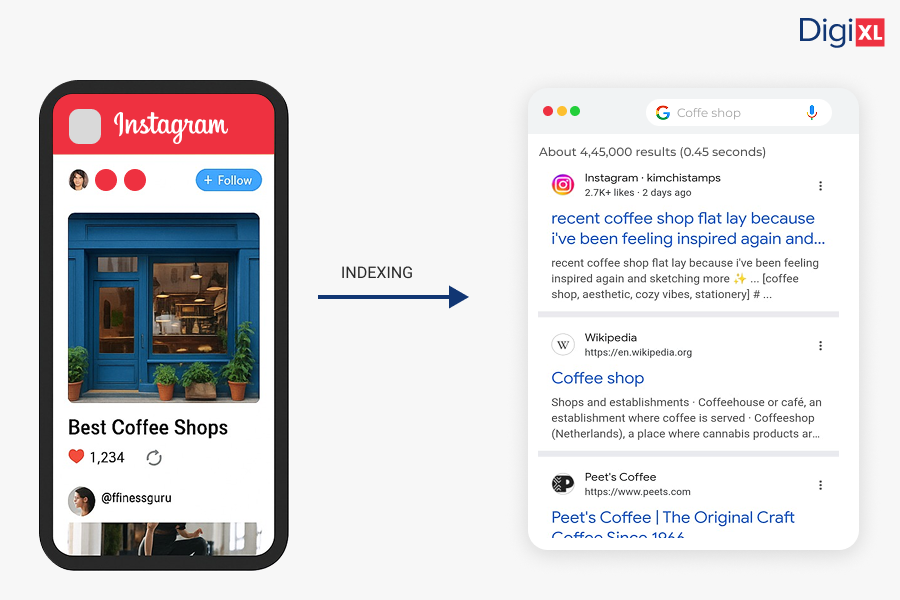
On July 10, 2025, Google confirmed it had begun indexing public Instagram posts and profiles. This update means that public content shared on Instagram may now appear in Google Search results, increasing your brand’s visibility well beyond the Instagram ecosystem.
This is a major milestone in the evolution of digital marketing. It reaffirms what many professionals already suspected: social content is no longer just social, it’s searchable.
For business owners, content marketers, and growth-focused creators, this opens a new dimension of organic discoverability. If leveraged correctly, it can position your Instagram content as a traffic-generating asset within your broader Instagram SEO strategy.
Let’s break down what this means, how to optimize your content for this new landscape, and what actionable steps you can take to capitalize on this shift before your competitors do.
What’s New: Instagram Content Appearing on Google
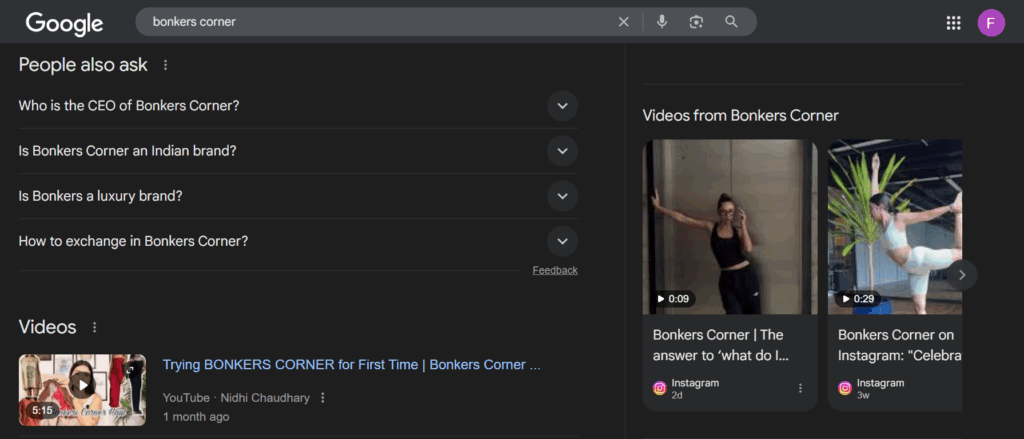
In the above screenshot, if you try searching a brand’s name, you will not only find information with website links but also on the right side, recommended Instagram videos.
Until now, Instagram has largely existed as a closed ecosystem. Your content, whether it was a beautifully crafted carousel, a high-performing Instagram reel, or an optimized profile, was only searchable within Instagram’s app. Discovery relied heavily on:
- In-app keyword searches
- Hashtags
- Explore page algorithms
- Direct sharing (DMs or Stories)
From an SEO standpoint, Instagram was essentially invisible. Posts weren’t indexed by Google, which meant they didn’t appear on search engine results pages (SERPs), and therefore contributed little (if anything) to your broader discoverability strategy.
That’s what’s changing dramatically
As of July 10, 2025, Google has confirmed that it has begun indexing public Instagram content, including:
- Static image posts
- Carousel posts
- Reels
- Instagram profile bios and usernames
This means your content can now show up outside of Instagram, directly in Google search results.
Why is this a big deal?
This move reflects a significant shift in how Google is adapting to the way users now consume and search for information. Today’s users (especially Gen Z and Millennials) don’t always begin their discovery journey on Google. Instead, they start with platforms like Instagram, TikTok, and YouTube. These platforms are becoming search-first environments, not just social networks.
To keep up with this behavior, Google is pulling in more real-time, multimodal content, videos, short-form posts, and visual-first media that traditional search engines once struggled to surface.
How do I check Google Indexing?
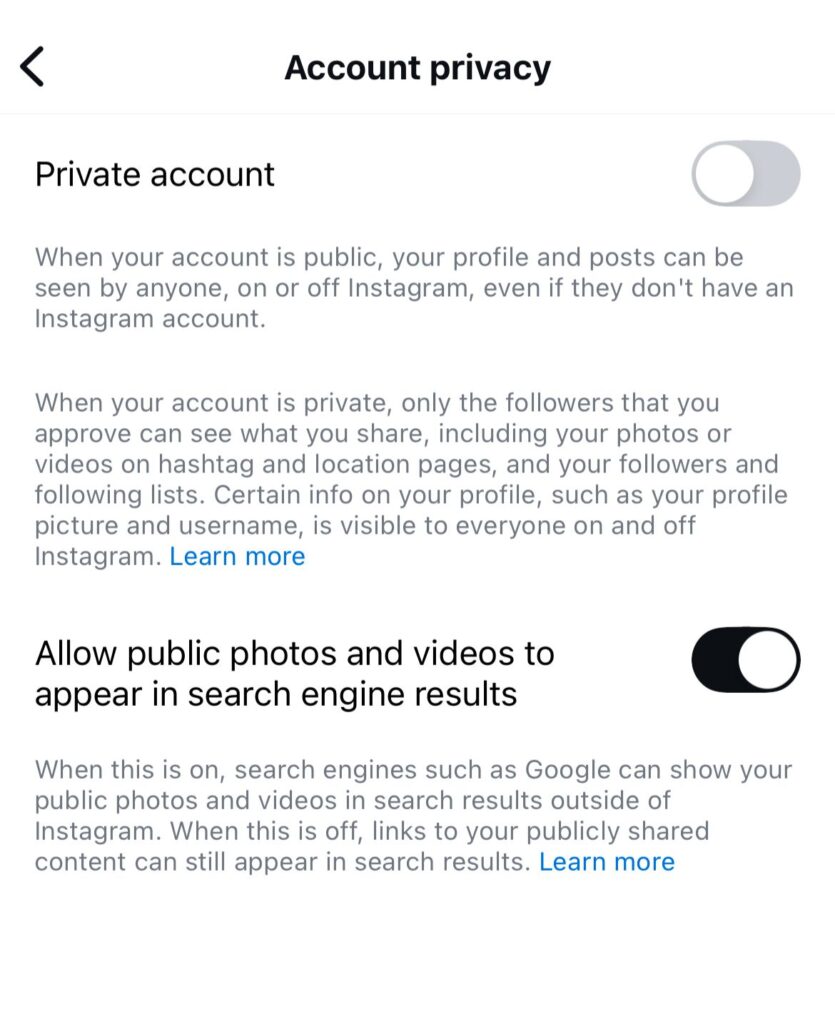
To check your Instagram settings for Google indexing:
- Open your Instagram profile
- Go to Settings and Privacy
- Tap on Privacy
- Scroll to Search Engines
- Toggle “Allow public photos and videos to appear in search engine results” ON to enable indexing
- To opt out, simply toggle the setting OFF.
What does this mean for your brand?
If your business or personal brand relies heavily on Instagram but doesn’t maintain a full website or blog, this is a game-changer.
You now have the opportunity to:
- Be found by people who aren’t on Instagram
- Rank for relevant keywords in Google search, even without a website
- Extend the lifespan of your Instagram content, turning short-lived posts into long-term SEO assets
- Tap into organic traffic through visual content (e.g., a skincare Reel or a fashion styling carousel)
This development is especially impactful for:
- Small businesses or solopreneurs who operate mainly through Instagram
- Influencers and creators who monetize their brand via partnerships or affiliate marketing
- Niche brands that thrive on community engagement but lack a traditional web presence
- Local businesses looking to reach nearby searchers through geo-tagged content
Example in Practice:
Let’s say someone searches for “best protein-rich vegetarian meals” on Google.
Instead of only getting blog articles or YouTube videos, they might now see:
- A Reel from a food creator breaking down a high-protein lunchbox idea
- A carousel post from a brand showcasing recipe options
- An Instagram profile that focuses on vegetarian meal planning
All indexed and shown within Google’s SERP just like any other webpage.
In short: Instagram is no longer just a social platform, it’s now a search asset. And for brands that act quickly, this opens up an entirely new lane of visibility, traffic, and long-term content value.
Why This Matters: The SEO-Social Shift is Real
To truly grasp the weight of Google indexing Instagram content, we need to understand a deeper shift that’s been brewing for years: how people search for information is fundamentally changing.
Not long ago, the typical discovery journey looked like this:
- Open Google
- Type a question
- Click on a blog, forum, or product page
But today? That behavior is splintering, especially among younger audiences. Instead of going to Google first, users are now turning to social platforms to search. And the data proves it.
Let’s look at the numbers:
- 41% of Gen Z use social media platforms like Instagram, TikTok, and YouTube as their primary search tool (Sprout Social, 2025).
- According to Forbes, Google has seen a 25% drop in usage among Gen Z, as short-form, community-driven content replaces traditional search results for discovery needs.
These numbers confirm what many marketers have long suspected:
Search is no longer exclusive to search engines.
In this new landscape:
- Instagram isn’t just for aesthetics, it’s also for answers.
- TikTok isn’t just for trends, it’s for tutorials, reviews, and recommendations.
- YouTube isn’t just for entertainment, it’s a visual encyclopedia.
Platforms are the New Search Engines
Platforms like Instagram, TikTok, and YouTube are now “search-first” destinations, especially for how-to queries, product research, lifestyle tips, and recommendations. Users don’t want static text, they want short, visual, relatable content delivered by people they trust.
And now, with Google indexing public Instagram content, the lines between search and social are officially blurred.
Google is adapting to what users want:
- Real-time content (think Reels and TikTok)
- Visually engaging answers (like carousels and short videos)
- Community-driven content (with social proof baked in via comments, likes, and saves)
For marketers, this is an inflection point.
What used to be two separate strategies: seo vs. social media marketing are now converging.
This shift means:
- Social media teams must understand keyword intent
- SEO teams must consider Instagram posts as part of content distribution
- Brands that optimize both will dominate discoverability on and off the platform
If your Instagram content isn’t designed to be search-friendly, you’re missing out on high-intent traffic that’s looking for exactly what you offer just not in blog format.
In essence, Instagram is becoming the blog post of the visual web, and Google is now treating it that way.
Key Benefits for Businesses and Brands
Let’s break down the tangible business advantages of this update:
1. Enhanced Discoverability Without a Website
Historically, if you didn’t have a blog or website, your visibility on Google was limited. Now, your Instagram profile can serve as a secondary landing page, increasing discoverability without additional infrastructure.
This is particularly valuable for:
- Early-stage brands
- Freelancers and service providers
- Influencers and personal brands
2. More Durable Content
Instagram content has traditionally had a short shelf life, from 24 to 72 hours of peak visibility. With indexing, posts become evergreen. A strong Reel or carousel could surface in search months after it’s posted, delivering ongoing value.
3. Organic Traffic Potential
This is where the real opportunity lies. Indexed Instagram posts can now drive organic traffic to your profile and, by extension, your business funnel. Whether you convert through DMs, Linktree, or native product tags, your reach just grew exponentially, without paying for ads.
4. Improved Multi-Channel SEO Strategy
Instagram no longer needs to sit in a silo. Now, your content strategy can unify efforts across:
- Website/blog SEO
- Social SEO (Instagram/TikTok/YouTube)
- Google Discover & featured snippets
- Influencer or affiliate content
This opens the door to a truly holistic digital marketing strategy.
5. Establish Topical Authority in Your Niche
When your Instagram posts consistently answer specific questions or cover key topics, you position your brand as an expert even without a blog. As your indexed content grows, Google may begin recognizing your profile as a reliable source, just like it does with websites.
The more relevant, valuable content you post, the more your brand builds trust and rankings.
6. Improve Attribution Across Platforms
With Instagram content driving Google search traffic, you can now track and attribute discovery across both search and social channels. By using UTM parameters and search analytics, you can finally answer:
“Did this post bring in leads from Instagram or from Google?”
This improves decision-making, campaign measurement, and future content planning.
7. Repurpose Content for Higher ROI
Google indexing gives you a reason to repurpose your best Instagram content. Instead of letting high-performing posts disappear after a few days, you can update them with stronger captions, alt text, or CTAs, and amplify their reach beyond the feed.
One carousel = Instagram post + Google snippet + LinkedIn visual + Pinterest pin. Max ROI.
8. Align Teams and Streamline Content Strategy
This update bridges the gap between social media and SEO teams. Now, content creators, designers, and SEO specialists can collaborate on unified messaging, keyword research, and visual storytelling.
Instead of working in silos, your teams can build a multi-channel strategy that performs across both search and social.
How to Optimize Instagram Content for Google Indexing
1. Start With a Public, Professional Profile
Only public profiles are eligible for indexing. Here’s what to check:
- Switch to a Business or Creator account
- Make sure your account is public, not private
- Enable “Allow indexing by search engines” in your Instagram privacy settings (rollout may vary by region)
Also, treat your Instagram bio like a homepage copy. Use concise, keyword-driven language that explains your value proposition, location (if relevant), and core services or products.
2. Incorporate Keywords Strategically
Google relies on language to understand your content. On Instagram, that means being deliberate about the keywords you use in captions, alt text, and on-screen video text.
Here’s how to do it:
- Research: Use tools like Google Keyword Planner, Wordstream, or Semrush to understand what your audience is searching for
- Apply: Integrate those keywords into your post captions naturally (avoid keyword stuffing)
- Reels and video: Use keywords in on-screen text and spoken audio, as these can also be transcribed/indexed
- Alt text: Manually write alt text that includes descriptive keywords related to the content and context of the image
Example:
Instead of: “Our latest drop is here 🔥”
Try: “Explore our new summer linen collection: lightweight, breathable, and perfect for humid weather.”
3. Post Content That Solves Problems
Google surfaces content that answers questions, so frame your content to be informative and valuable.
Effective content formats include:
- How-to tutorials
- Step-by-step carousels
- Educational Reels
- Before-and-after visuals (for products or services)
- Quick tips and checklists
Not only does this increase indexability, but it positions your brand as a trusted resource, not just a product pusher.
4. Leverage Hashtags Thoughtfully
Hashtags remain relevant, not just for platform search, but now potentially for Google indexing as well.
- Include 5–10 highly relevant hashtags that align with your niche and keywords
- Mix broad (e.g., #Skincare) with long-tail hashtags (e.g., #AcneSkincareTips)
- Avoid spammy or unrelated tags
5. Refresh and Recycle High-Performing Posts
Your old content just became valuable again.
Audit your past top-performing posts:
- Add SEO-optimized captions
- Update image alt text
- Add contextual comments or CTAs
- Repost or repurpose into a new format (e.g., Reel → Carousel)
Treat them like blog posts, update and maintain your best assets.
Considerations and Cautions
While this update is a major opportunity, it also comes with a few strategic considerations
1. Increased Public Visibility
Your content may now surface beyond Instagram, reaching audiences who aren’t familiar with your brand. Ensure your posts are:
- Professionally branded
- Aligned with your values and offer
- Contextual (avoid inside jokes or ambiguous captions that don’t make sense out of the feed)
2. Content Sensitivity
If you’ve posted personal content in the past, remember that those posts may now appear in search results. Conduct a content audit and archive or update posts that no longer reflect your brand identity.
3. Opting Out
If you’re not comfortable with your content being indexed, Instagram gives you the option to disable it in your privacy settings. However, most public-facing brands will benefit from staying indexed.
Instagram as a Micro-Landing Page
This change invites a mindset shift: treat every Instagram post like a micro-landing page.
That means:
- Hook: A clear first line or visual that stops the scroll (and now, earns a click in search)
- Value: Content that answers a question, educates, or provides insight
- Call to Action: Direct viewers on what to do next: DM, save, click the link in bio, visit your website, etc.
Well-optimized Instagram posts can now function as
- Searchable FAQs
- Entry points to your funnel
- Relationship builders at scale
What This Means for Marketers and Agencies
For marketers managing social accounts, this update elevates the role of social content creators to that of SEO contributors. Your content decisions now impact:
- Brand visibility in organic search
- Long-term traffic generation
- SERP real estate
It also demands tighter alignment between SEO teams and social teams. Copywriters, designers, and strategists must now think cross-functionally to create content that is both socially engaging and search-optimized.
Key Action Points
- Audit your Instagram bio and past content
- Ensure consistency in tone, keywords, and CTA alignment
- Update your content calendar
- Include SEO-rich content themes and evergreen posts
- Create content with searchability in mind
- Think beyond the feed, what will still be relevant a month from now?
- Train your team
- Educate content creators on keyword research, alt text writing, and optimizing Reels and captions for SEO
- Monitor search analytics
- Use tools like Google Search Console and UTM tags to track if your Instagram content is driving off-platform visibility
Conclusion
The ability to appear on Google without needing a website is a massive opportunity, especially for smaller brands and creators.
This update shifts the dynamics of digital marketing by blending:
- Visual-first content
- Search-driven discovery
- Social platform credibility
Smart marketers will act early, adapt their content workflows, and turn Instagram into a scalable visibility channel that supports both social growth and organic traffic goals.
At DigiXL Media, we’re helping brands stay ahead with social media strategies that make their content not just scroll-worthy, but searchable too. Want tips, trends, and updates that actually move the needle?
Follow us on socials: X, LinkedIn & Facebook and let’s make your content work harder, everywhere it lives.